
A few years ago, if you wanted to blow as an Afrobeats artist, you needed your song to be everywhere on the radio, on music channels like TRACE, MTV Base, Soundcity, with label backing, and for every DJ to play it at parties or in the club.
Today, all you need is one social media platform to go viral, and that platform is TikTok.
Right now, the fastest route from “nobody knows this song” to “wait, this is everywhere” is a 15-30 second video posted by a random creator who caught the right moment, emotion, or dance.
We’ve seen it happen again and again: a sound starts quietly on TikTok, fans jump on it, creators remix it, memes are born, dance challenges are created, and suddenly the song is charting, getting booked for shows, and running up streaming numbers worldwide.
That’s because Afrobeats growth is no longer label-led. It’s creator-led.
Creators decide what blows up.
Dancers, skit makers, meme pages, storytime creators, even faceless clip accounts, they are the new gatekeepers of viral music.
Labels now chase TikTok growth & adoption, not the other way around.
In this article, we’re breaking down real Nigerian case studies, how artists like CKay, Ogabbah, Fave, and others rode dance challenges, meme sounds, and storytelling trends straight into mainstream success.
You’ll see how the sound first appeared, the types of videos fans made, how creators evolved the idea, and how all that attention turned into streams, fans, and bookings.
Most importantly, we’ll show how artists and creators can both earn from this system using OwoDaily content rewards, where songs are listed as bounties, creators get paid to promote them, and artists intentionally fuel virality instead of hoping for luck to blow.

Before we start naming artists and hit songs, let’s clear one thing up: songs don’t blow up on TikTok by luck.
There’s a pattern, and once you see it, you can’t unsee it.
Almost every Afrobeats song that “came out of nowhere” followed the same journey, from a tiny snippet to millions of streams.
Here’s how it usually happens.
The “First Spark”
Every viral song on TikTok starts with a short clip, not the full track or the whole chorus.
Usually, this is just 10-20 seconds that hits on something emotional or rhythmic, and, funny enough, the clip is often not even the official hook.
The first spark is usually one of these:
- The most danceable beat in the song.
- The part of the song where your body just wants to move, even if you didn’t plan to dance.
- A funny or catchy lyric, something people can lip-sync, exaggerate, or turn into a joke.
- A painfully relatable line which is perfect for storytimes, “POV” videos, or relationship content. This is the part of the song that makes someone stop scrolling and think: “Wait… play that again.”
Once creators latch onto that moment, the fire starts.
The Creator Multiplier Effect
Here’s where TikTok really does its virality magic.
The first people to touch the sound are usually early adopters, like:
- Dancers
- Skit makers
- Lifestyle creators
- Relationship storytellers
- Meme pages
The best part is that each creator uses the same sound, but tells a different story with it.
One person dances with it.
Another makes a relatable skit with it.
Another turns it into comedy.
Another uses it for soft-life content or to showcase what they sell.
This is remix culture in action. TikTok’s algorithm loves this because it’s not just repetition, it’s variation & consistency at scale.
- Same sound.
- Different faces.
- Different emotions.
- Different audiences.
The result of this is TikTok pushes the sound harder because it sees:
- High usage
- High engagement
- Multiple content styles
That’s how one sound jumps from 5 videos to 500 to 50,000 to 5,000,000.
From TikTok to Streams & Bookings
Once the sound finally goes viral on TikTok, other social media platforms like Instagram, Facebook, and Snapchat pick it up, and the real-world growth kicks in.
Here’s the usual chain reaction:
TikTok → Shazam/ Google → Music Streaming Platforms like Spotify, YouTube Music, etc.
People hear the sound and want the whole song.
They Shazam it or Google it.
They search for it.
They stream it.
The number of sponsors and big players in the entertainment space starts paying attention.
- DJs add it to their sets
- Event planners start calling
- Promoters book the artist
- Brands start requesting the artist
- Other artists want to collaborate.
- Record label owners want to book the artist (if they are independent)
Suddenly, the artist is getting:
- More streams
- More show bookings
- More visibility
- More money
- More attention
All because creators made the song viral, & impossible to ignore.
This is exactly why TikTok has become the most powerful growth system in Afrobeats today.
Nigerian Artists Who Rode TikTok to the Top
Many artists like Tyla, Rema, Ayra Starr, Fave, Davido, Kizz Daniel, Odumodu Black, and Adekunle Gold have ridden the TikTok train to virality.
Here are two popular examples you can learn from.
CKay – “Love Nwantiti” and the Dance Challenge Explosion
Here is how one simple dance turned this song into a global Afrobeats anthem.
CKay didn’t blow up overnight.
And Love Nwantiti didn’t either.
CKay entered the Nigerian music scene around 2016-2017 and had early traction with records like Container in 2018.
But when Love Nwantiti dropped in 2019, it wasn’t an instant hit.
It was one of those songs people loved quietly. Soft streams, organic listens & no viral madness yet.
@joeyakan Ckay – No one rated “Love Nwantiti” #Afrobeats #Ckay #LoveNwantiti Podcast #Musictok #Nigeria #AfrobeatsIntelligence
By 2020, the song was still circulating locally enough to justify remixes from other artists like Joeboy & Kuame Eugene.
But the real turning point didn’t happen in studios, radio stations, or high-staged concerts.
It happened on TikTok.
In 2021, TikTok was deep in its dance era. Short choreographies & clean transitions were a thing, and creators were going viral every day with this template.
Global creators were watching each other’s moves and remixing ideas in seconds.
That’s when dancers like Just Nife created a simple, repeatable dance to Love Nwantiti. Nothing complicated & no professional sets. Just rhythm, emotion, and vibes.
That dance template did two powerful things:
- It was easy enough for anyone to learn & copy
- It matched the emotion of the song, not just the beat
Very quickly, other dancers jumped on it.
@itsjustnifee I’m going to do this dance 100 times! 😂 (DC: mee) #newdc #itsjustnife #lovenwantiti #afro #nigerian #ghanian #london #uk
Then something even more important happened.
Once the dance proved it could work, TikTok did what TikTok does best.
- Skit creators used the sound for romantic jokes
- Couples used it for love content
- Creators remixed it in different languages
- People dueted, stitched, and remade their own versions of the song in their local languages.
It was the same sound, but with different interpretations, and this caused a massive volume.
@musicorlyrics #answer to @Music or Lyrics #lovenwantiti #lyrics #amfamousworldwide #parelleltv #cover #music #foryou #musicorlyrics
At this point, Love Nwantiti stopped being “CKay’s song” and became TikTok’s sound.
The impact was immediate and measurable:
- TikTok → Shazam → Spotify & Apple Music
- DJs and event planners started requesting it
- International playlists picked it up
By the end of 2021:
- Love Nwantiti spent months on the Top 5 Global Billboard charts
- Crossed 1 billion Spotify streams
- Became 8× Platinum in the US
- Earned CKay a Grammy nomination
- Made history as one of the most certified Afrobeats songs globally
@hypetribe.ng Ckay Receives his 1 BILLION Spotify plaque for “Love Nwantiti” 🎉. – First Solo Nigerian Song to surpass 1 Billion on Spotify 🎉
This wasn’t luck but a product of time and a simple formula, which is:
- A 10-20 second emotionally sticky snippet
- One easy dance template
- Creator-led distribution
- Remix culture is doing the heavy lifting
OG Abbah – “Wayyo Allah Na (Kakashe Kakashe)” and the Power of Relentless Self-Promotion
OG Abbah’s breakout story is proof that virality doesn’t always start with big creators.
Sometimes, it begins with the artist refusing to stop posting.
Before “Wayyo Allah Na (Kakashe Kakashe)” became one of Nigeria’s most recognizable TikTok sounds in 2025, OG Abbah was already doing the work most people skip: showing up daily.
@ogabbah Next of king 👑 Oh God I Go spend my money!!@OWNHERO🎥⚔️ 🚀🚀🚀
After releasing the song, he spent months consistently promoting it on TikTok, singing it, lip-syncing, performing it casually, and embedding it into everyday content.
No fancy rollout, nor massive influencer budget. Just repetition, belief, and patience.
At the time, the song hadn’t “blown” yet, but TikTok was quietly learning it.
Everything changed when a major TikTok creator, Black Chully, posted a casual interview-style video where she confidently recited the lyrics to the song.
@blackchully3
That single post triggered curiosity at scale.
Viewers immediately started asking:
- What song is this?
- Where can I find the full track?
- What does it mean?
Because the lyrics were in Hausa, the mystery made it even more shareable. People went searching, replaying the clip, and using the sound to learn the words themselves.
Once curiosity kicked in, the creator multiplier effect took over.
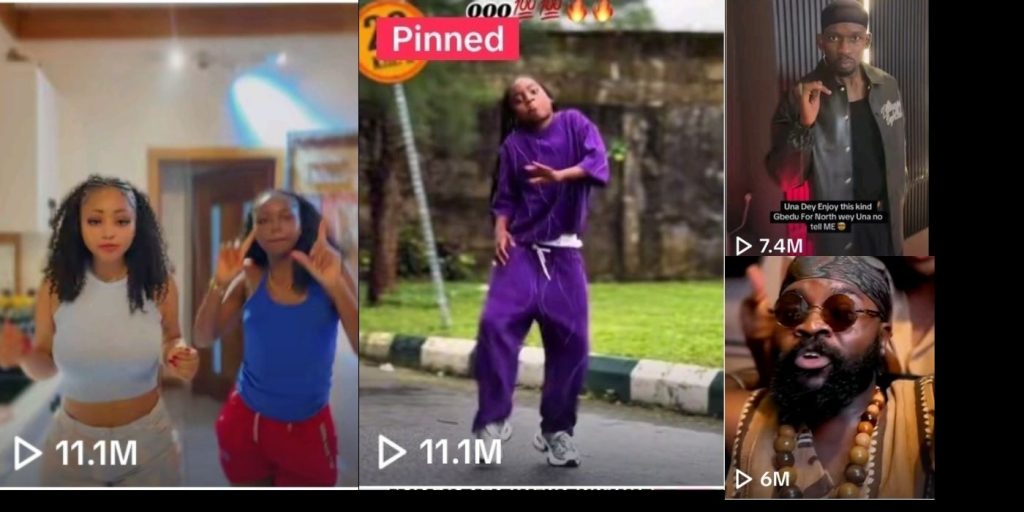
Big artists like Mr Eazi jumped on the sound. Actresses such as Regina Daniels posted videos using it. Influencers across different niches followed.
Then the dancers arrived.
Dance creators like Princess Annabel and dance groups such as Exodus Dance Crew created structured dance challenges to the sound.
The choreography was expressive, rhythmic, and easy enough for anyone to remix, which is exactly what TikTok rewards.
Soon, everyone had their own version. This went viral with millions of views on each post made with the song.
One of the most powerful remixes came from the Loud Urban Choir, whose performance pushed the sound beyond dance into emotional and vocal storytelling. It gathered over 6 million views, over 727k comments & 11.9k comments.
From there, the sound spread beyond Nigeria, and creators around the world began dancing, singing, and interpreting it in their own ways.
The result? “Wayyo Allah Na” became unavoidable on TikTok. The song dominated feeds, crossed language barriers, and earned recognition as the December Anthem of 2025 in Nigeria.
OG Abbah went from self-promoting daily on TikTok to:
- Show bookings
- Radio interviews
- Industry attention
- A sound that creators actively searched for
Worthy Mention:
Tyla (The Artist Who Constantly Turns Dance Challenges into Music Virality)
Tyla isn’t Nigerian, and she’s not exactly Afrobeats.
But when it comes to cracking TikTok virality for music, she’s one of the smartest case studies on the internet right now.
From Water to Jump to ART, Tyla has shown one thing clearly: going viral with your music is not an accident. It is engineered.
Her songs don’t just trend, they stay relevant on social media for months.
And the pattern is simple but deadly effective.
If you pay attention, each release she makes comes with an easy, repeatable dance idea.
The dance isn’t complicated, nor is it something that requires training.
It’s just easy movements that feel natural, expressive, and fun enough for anyone to try in their bedroom, school corridor, or studio.
But here is where it gets even more interesting. Tyla doesn’t always create the dances herself.
In many cases, fans create the first version, and once one variation starts popping, she adopts it, reposts it, and lets the internet do what it does best: adopt it & multiply it.
@kipittok I know she only did half of my trend but still i’m so happy 🥳❤️🗣️ @TYLA #fyp #viral #kipittok #trend #dance
That’s exactly what happened with Water.
And she’s repeated the same formula again with Chanel.
The Chanel dance challenge stayed on TikTok for weeks, not because of heavy promo, but because:
- The moves were simple
- The vibe was confident but playful
- The sound fit lifestyle, dance, and “soft flex” content perfectly
With this, creators could dance to it, add their own flavor, remix it for fashion, transitions, POVs, or couple videos. And the best part is that creators who jumped on the sound and dance consistently went viral, pulling the song higher up the charts while creators grew their pages at the same time.
Here is what I mean
@top_ranks7
Tyla has proven that you don’t need to “wait for TikTok” or any platform to push your music; you design for TikTok.
Virality happens faster when:
- A song has a clear visual idea
- Fans feel invited to participate, not just listen
- Creators can jump on without overthinking
This is why dance challenges still work, not because they’re old, but because they turn listeners into promoters.
FYI: This is what Fave (another viral music artist) did and placed a $500 TikTok bounty on her song for anybody with a unique dance for her song and win.
@bigduttygirlfave My first TikTok challenge. Tag me tag me. Use hashtag #intentionsdancechallenge 💗 Will announce winner in a week? Is that too much time? 🤔
Just like Tyla, Fave, or Rema, you don’t need $500 or $10,000 to start a viral dance challenge for your music; there is a simpler way.
The Missed Opportunity Most Artists Make
For years, most upcoming artists have relied on luck. Drop the song. Post it once or twice. Pray a big creator stumbles on it. Hope TikTok “does its thing.” When it doesn’t, the song quietly dies and everyone moves on to the next release.
The real problem isn’t talent or effort. There’s usually no incentive structure for creators to push the sound, no system to test different content styles at scale, and no way to track what’s actually working early.
Virality becomes something mythical rather than engineered.
That’s where intentional virality separates breakout songs from forgotten ones.
How OwoDaily Changes the Game for Upcoming Artists
OwoDaily content rewards help by turning music promotion into a structured content incentive instead of a waiting game.
With Music Content Rewards, artists don’t just upload a song and hope creators like it.
They actively list their song as a paid content opportunity for creators to hop on. That single shift changes everything.
Now, creators aren’t guessing whether to use the sound.
They’re invited to experiment with it & are rewarded for doing so. They are also motivated to push it hard.
An upcoming artist can upload a song snippet, set a reward, and immediately attract dozens or hundreds of creators who are already good at TikTok.
Some will dance to it.
Some will use it for storytime.
Some will turn it into skits, memes, POV videos, or choir-style remixes.
Instead of one artist posting the same promo video every day, you suddenly have multiple creators testing multiple angles at the same time.
TikTok’s algorithm loves that kind of volume and variation.
This is exactly how songs like “Love Nwantiti” and “Kakashe Kakashe” eventually exploded, except they relied on chance moments and big creators stumbling into the sound.
OwoDaily compresses that timeline.
It gives upcoming artists access to creator energy on demand, not by luck.
When ten different creators post ten different interpretations of the same sound in a short window, patterns emerge fast.
You can immediately see what’s sticking, what’s getting comments, what’s getting duets, and what’s triggering remixes.
Instead of waiting months to find out whether a song works on TikTok, artists get feedback in days.
This approach works better than organic hope because creators are incentivized to show up and post consistently, not just once.
Multiple content formats are tested at the same time, increasing the chances of finding that one viral angle. Data comes in early, so artists know which snippet, lyric, or beat drop to double down on.
Also, attention for your song builds faster because TikTok sees repeated activity around the same sound from different accounts, which is exactly what the algorithm rewards.
How Artists & Creators Can Copy This Strategy (Step-by-Step)
For artists who want to copy this strategy, the process is simple but intentional.
You start by choosing the most TikTok-friendly part of your song, usually a 10- to 20-second clip that feels emotional, funny, or rhythmic enough to loop.
You then list that song as a content reward on OwoDaily and clearly encourage the types of content you want creators to try, whether that’s dance challenges, storytime videos, meme-style skits, or choir and remix formats.
As creators post, you watch what gains traction and lean into it harder. There’s already a full OwoDaily guide that walks artists through listing a content reward step by step.
For creators, the system works just as cleanly.
Instead of randomly jumping on sounds and hoping one pops, creators can browse music bounties on OwoDaily and pick songs that already feel TikTok-native.
The smart move is to create at least two styles of content per song.
One should be safe and familiar, like a dance, lip-sync, or POV format. The other should be experimental, like a skit, remix, or unexpected angle.
Even if one doesn’t blow, the other might. Either way, creators earn rewards as they grow their pages and often end up early on songs that later explode.
The Outcome
The outcome is a win on all sides.
Artists get real traction: more streams, more attention, more bookings, and actual leverage when talking to promoters or brands.
Creators get paid content opportunities, faster audience growth, and early access to breakout sounds before they’re saturated.
OwoDaily becomes the bridge that connects both sides, turning promotion into collaboration instead of begging.
The real takeaway is simple. Virality isn’t magic.
TikTok success follows patterns, and Afrobeats has proven that over and over again. Content bounties turn chance into strategy.
Instead of waiting and hoping, artists can build momentum on purpose, and creators can earn while doing what they already love. If you’re an artist, list a song. If you’re a creator, join a music bounty. That’s how the next wave blows up.


